
You’ve just moved to a new city. Here are some things you’ve noticed so far.
As you unpacked the boxes from the moving truck, a neighbor, out for her morning walk, was kind enough to wave “hello.”
At a nearby coffee shop later that week, you struck up a conversation with someone else waiting in line for her coffee. Is it always this slow? you inquired out the side of your mouth. It’s part of the “experience,” your new accomplice quipped back, to which you shared a quiet chuckle. “We should totally get together sometime,” she suggested, and you were delighted to exchange contact info. Only, you haven’t heard from her since. It’s been three weeks.
Nothing personal, you think, as you take to the Meetup app to search around for a pickleball group. You find one that seems promising and show up for your first foray, but there aren’t any courts open. It’s hard to figure out who’s really running the thing. So, you leave.
As time goes on, you find volunteer groups to be transactional. Events open to the public are few and far between. You give it another good month until you decide, I guess this place just isn’t for me.
What if this feeling – of distance, of longing, of disconnection – wasn’t just a vibe? What if there was a way to measure it, and to measure its opposite – connection, closeness, conviviality?
Last year, the US Chamber of Connection, a non-profit dedicated to building an infrastructure of connection across the country, released their State of Connection in America report, which set out to answer these questions. They spent years studying how, and why, and when people tend to feel socially isolated and, conversely, why some report a thriving social life. Out of this, the Social Connection Index (SCI), or the Six Points of Connection (we love some points), was born.
(I should, perhaps, take a moment to say here that I do not represent the US Chamber of Connection in any sort of official capacity; I just nerd out over this kind of stuff.)
According to the US Chamber of Connection, “the Social Connection Index (SCI) measures six everyday, place-based behaviors of connection — the kinds of relationships, supports, and shared spaces that enable people to thrive and fully participate in their communities.” The six behaviors, earlier referred to as the six points, go as follows:
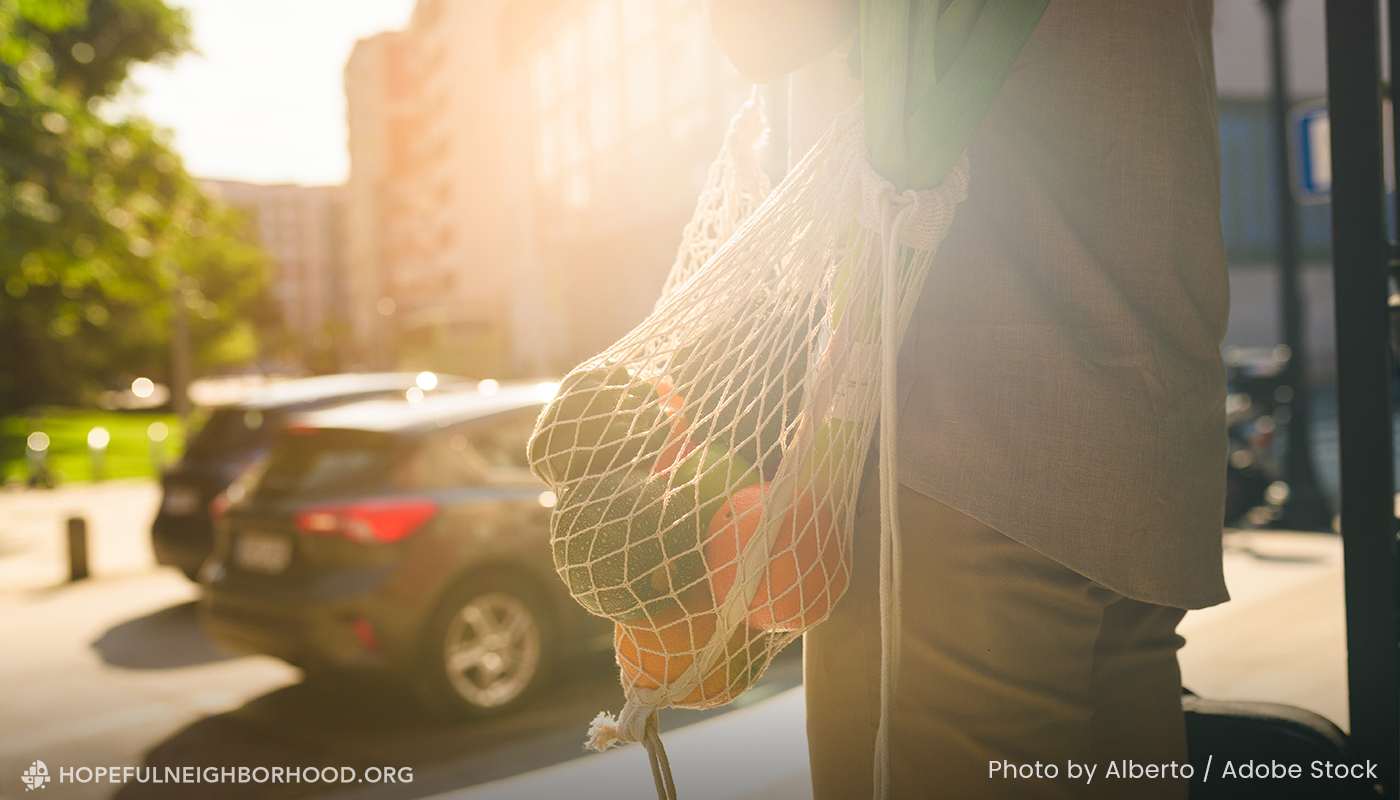
- Neighborhood contact. Neighborhood contact is fundamentally about whether or not people have at least one neighbor on whom they can rely in an emergency. Someone to fill sandbags with before the flood. Someone to watch the dog while you take the kid needing stitches to the emergency room. Someone who’s there when you’ve spent your last drop of olive oil. Got one of those? Well, then you’ve got neighborhood contact.
- Community of identity. This is a group of people with whom you share beliefs, values, or experiences. Churches, rotary clubs, Alcoholics Anonymous – these are our communities of identity.
- One-on-one relationships. 43% of Americans get together with friends or relatives less than once per week. Go back to that scenario in the coffee shop. Imagine if that woman had actually followed up. That’s how one-on-one relationships begin!
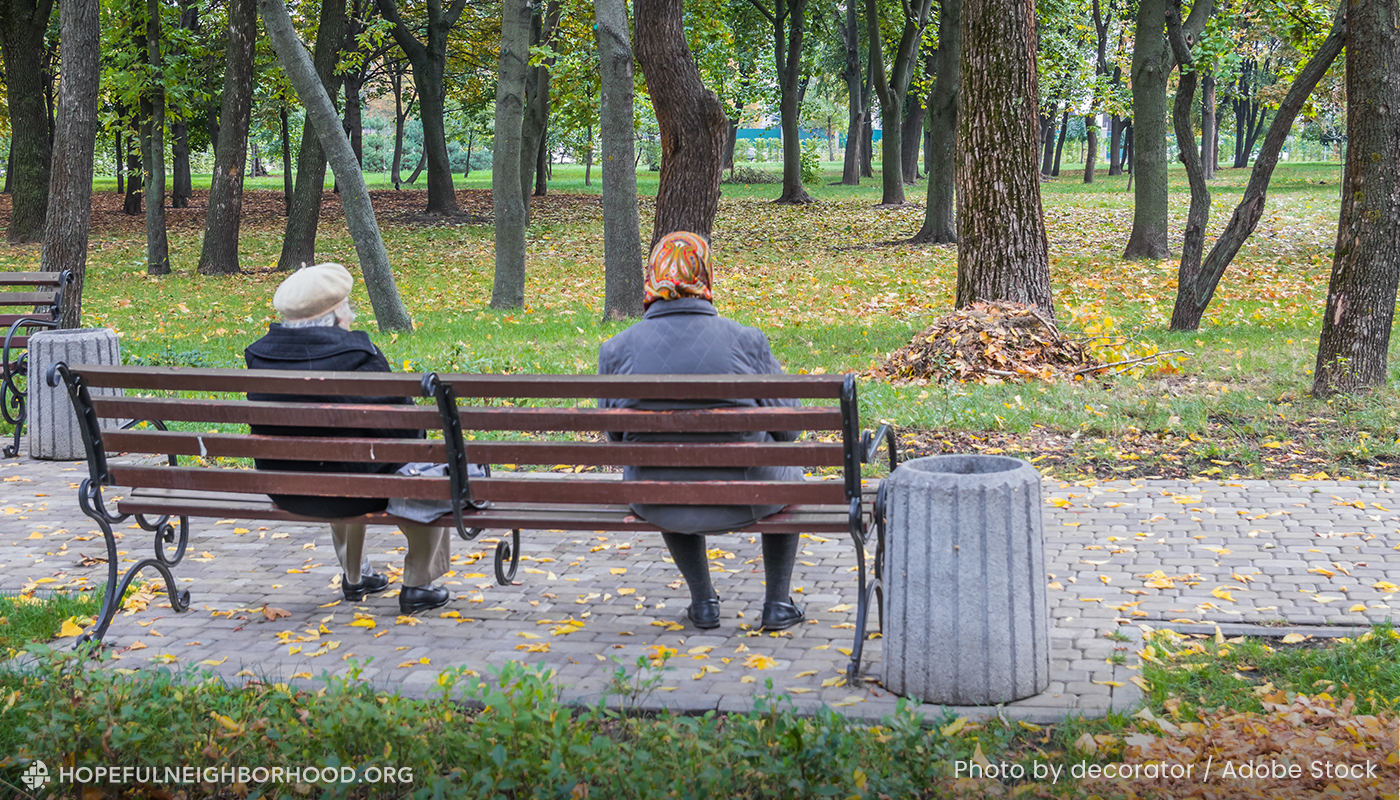
- Third place. If you haven’t heard this term by now, it’s time you do. “Third place” (a term originally coined by sociologist Ray Oldenberg in his book, The Great Good Place) refers to somewhere other than the home (first place) or the workplace (second place) where someone can go to make and engage with “informal associations.” Cafes, pubs, parks, bowling alleys – all third places. Only 23% of Americans report going regularly to such a place.
- Community of play. “A group that gathers around a shared joy, practice, or hobby.” You went looking for this when you looked up pickleball groups. Might also include birdwatching clubs, mahjong tournaments, CrossFit gyms. It’s worth noting that the Chamber’s research revealed a community of play as the key to the others – through PLAY, we get one-on-ones, access to third places, and find new neighbors.
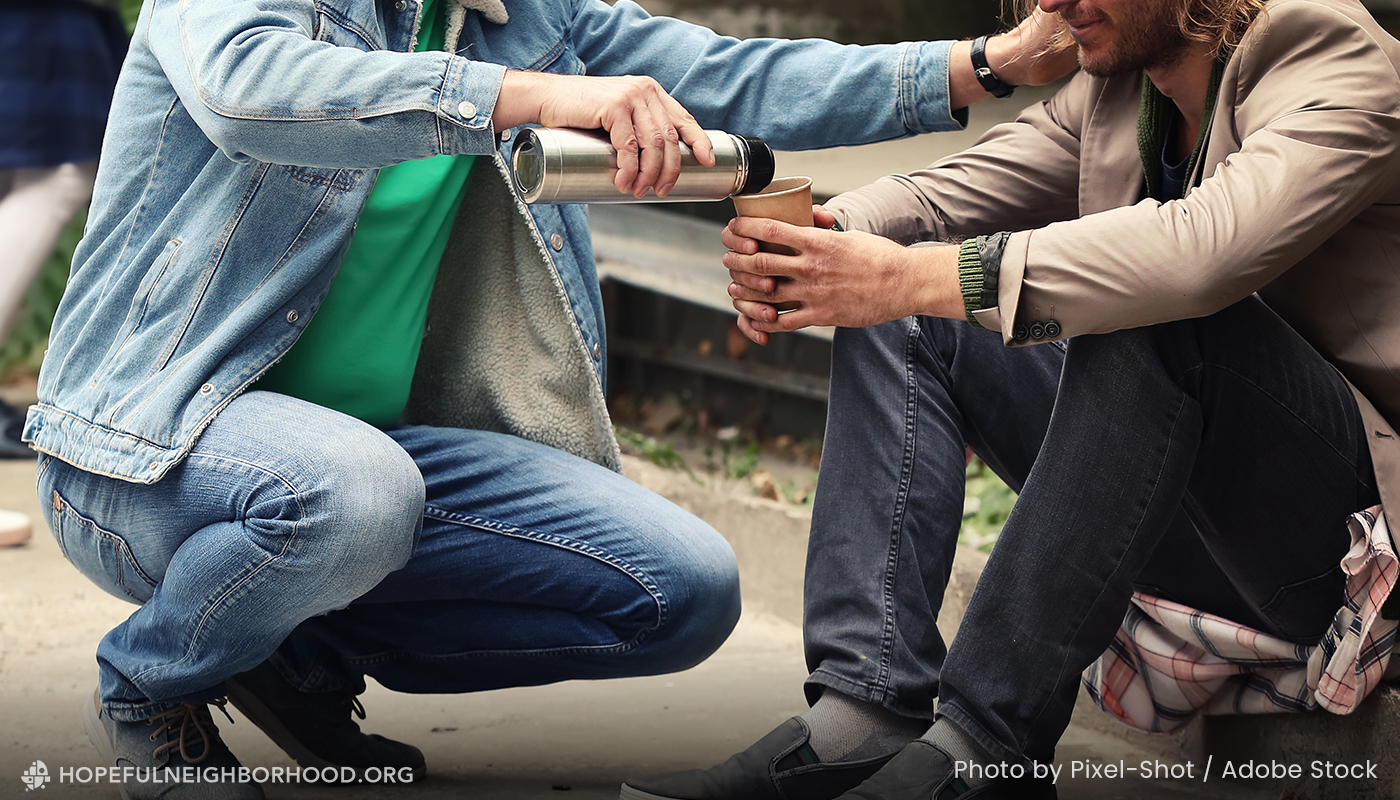
- Community service. Just 26% of Americans volunteer regularly. Which is a shame, because serving alongside others can reduce loneliness, boost mental health, and connect people across differences.
Now, if you’re anything like me, you’ve already completed a fairly thorough self-inventory, using this SCI as your guide. Good! I think that’s what it was partially intended for. How’d you “score”? What would you say is your strongest point? Your weakest?
With that said, if you stop there – especially if you consider yourself a community person in any way, shape or form – you’re missing something vital. The SCI can and should be applied at the community level.
For people who see themselves as neighbors, the six points should invite richer questions:
- What practices or events are in place to give neighbors a chance to meet one another in a way that feels easy and natural?
- How many third places exist within the neighborhood? Are they easily identifiable? How much do they cost to get into? (A large paywall is a third space killer.)
- Where would someone go – i.e., the person who just moved to the city – if they want to be part of a community of play? Who or what is in place to help make joining feel less intimidating?
Our world is a technocratic one. Data proves concepts, moves money, and determines strategy. Maybe you’re a little annoyed by that sometimes. You’re not alone.
But data also gives us a structure to work within. If used well, the Chamber’s Social Connection Index has the potential to move us from the “vibe” we might have about a place lacking connection to a baseline of what, exactly, might be missing and what we can do to build a truly connected society.




0 Comments