
“Education is the most powerful weapon which you can use to change the world.”
— Nelson Mandela
About seven years ago, I had the opportunity to help launch a public charter school. After a decade of serving in municipal government, I left that sector to invest on a more local level, because I have always believed that neighborhoods and communities change from the inside out, and one of the most powerful change agents inside any neighborhood is its local school.
There is a saying in government I found to be true: “As go the schools, so go the neighborhoods.” Schools and neighborhoods are inextricably linked. Local public schools don’t choose who they serve; they serve everyone. It’s the beautiful mandate they carry, and it’s why they need the community around them to show up.
How You Can Show Up
With Teacher Appreciation Week approaching (May 4–8), there is no better time to ask yourself: What would it look like for me to invest in my neighborhood school? Here is how you can get started.
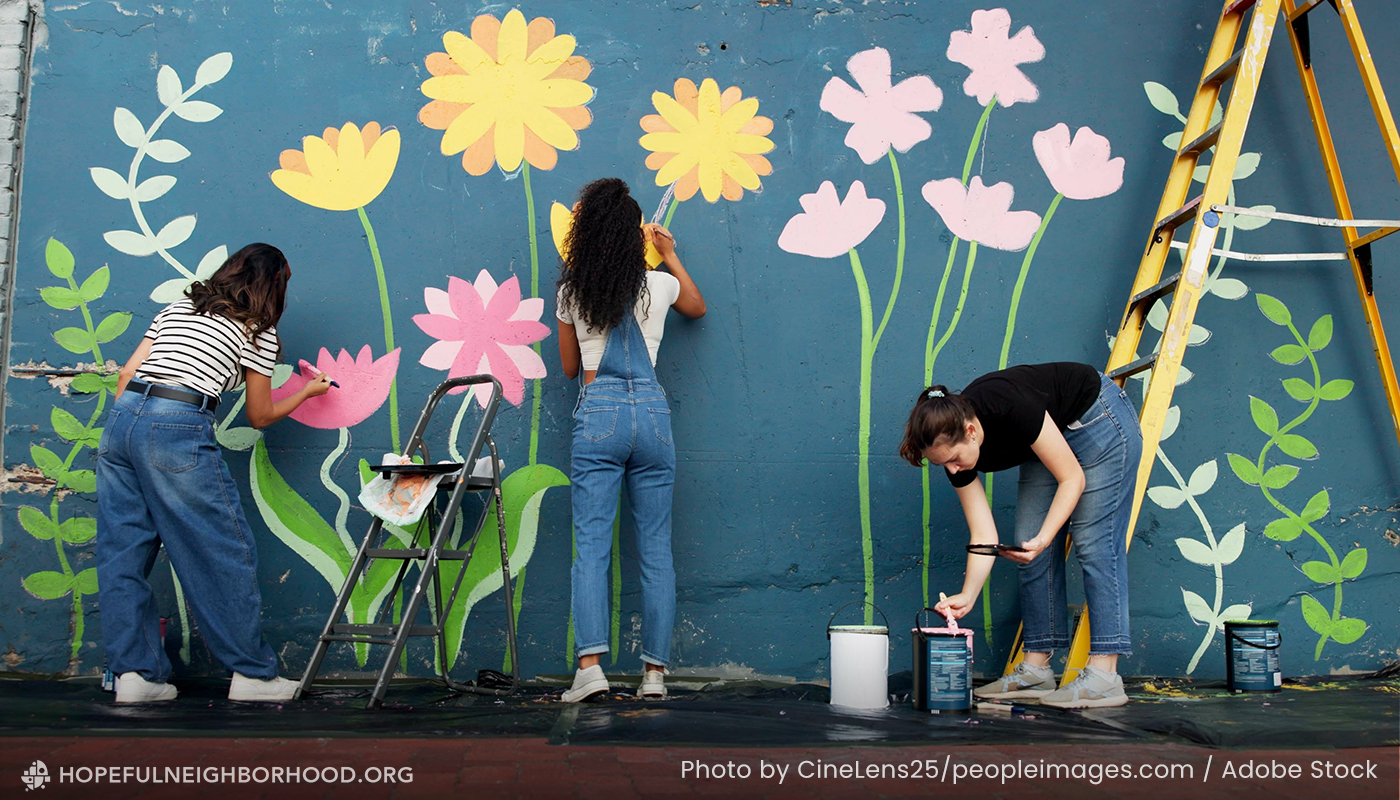
Volunteer. Schools need trusted hands for all sorts of things: annual cleanup days, helping teachers set up classrooms, or serving as a reading tutor. Grab a group of friends and do something special for teachers during Appreciation Week. Many schools will gladly take the help.
Mentor. Research shows that just one caring adult outside of a child’s family can increase their educational and career success by up to 70%. You don’t have to be a professional youth worker. You just have to show up. Whether you’re a stay-at-home parent, a small business owner, or a dentist, you have something to offer. Even sharing your story at a career day counts.
Substitute. Many schools face chronic shortages of substitute teachers. It can be taxing on school leadership to scramble daily to fill classrooms. If you’re in a position to help, it’s one of the most practical things you can do.
Advocate. Consider serving on your local school board or PTA. It’s not for everyone, but some of you reading this would make excellent advocates at the table where decisions happen.
I recently met with a local church that has adopted the schools in its immediate area. They aren’t a megachurch, but a dedicated community church faithfully serving their neighbors. They’ve launched reading, tutoring, and mentoring programs and partnered with local organizations to make sure teachers and families have supplies at the start of the year. They are a living example of how care and concern turn into action.
What Ms. King Taught Me
I thought I understood community engagement and how to mobilize people for change when I joined the launch team for the charter school I mentioned above. I had the language, the vision, and the energy. One evening, during a community meeting in the Woodlawn neighborhood on Birmingham’s eastside, I was in the middle of my usual pitch, “I believe every parent wants what’s best for their child in this neighborhood,” when a woman in the room stood up and asked, simply, “Why do you believe that?”
Her name was Ms. King. She was a longtime community champion, a single mother who had gone back to college for her teaching degree while raising three boys, and she had seen many enthusiastic young people come through that community with ideas they didn’t fully understand. She challenged my assumptions and asked me, if what I was saying was true, why our neighborhood and the surrounding community did not reflect it. By the end of that night, I was more aware than ever of how much I still had to learn.
She handed me a challenge: read There Are No Children Here by Alex Kotlowitz, then come find her. “I’ll see how serious you are,” she told me. “I’m not hard to find.” I went home that night, ordered the book, and read it. When I found her at the community center a few weeks later, she smiled and asked, “Did you get the book?” I told her I had, and she said I was the first person ever to take her up on the offer.
Ms. King became a mentor and a champion for me. But only after she knew I was serious. That’s often how it works in neighborhoods that have been overpromised and underserved. Showing up is not enough. You have to keep showing up.
Your neighborhood school doesn’t need a savior. It needs neighbors, people who are willing to learn, stay, and serve. Whether you volunteer once or commit for a season, your presence communicates something powerful to the students, teachers, and families who show up every single day: “You are not alone.”



0 Comments