Every neighborhood and community has a distinct culture. That culture is comprised of those who have lived there, both past and present. There are histories and stories to the places where we live. Some of them are beautiful, and some of them are broken. As we examine our neighborhoods, we may ask the questions, “What makes this place unique, and how can I make a difference here? What would it mean to create a more hopeful neighborhood?” In my work, we refer to this as shalom, which means wholeness, well-being, or completeness.
I’m currently reading Amy Sherman’s book Agents of Flourishing: Pursuing Shalom in Every Corner of Society. In it, she details how to live not only for our flourishing, but for the flourishing of our neighbors. To seek their benefit and well-being. To express love and care, and to dream for every neighbor to experience wholeness. She roots her book in the Six Endowments of Human Ecology framework by Thriving Cities Group.
The Six Endowments of Human Ecology
- The True: the realm of human knowledge and learning
- The Good: the realm of social mores and ethics
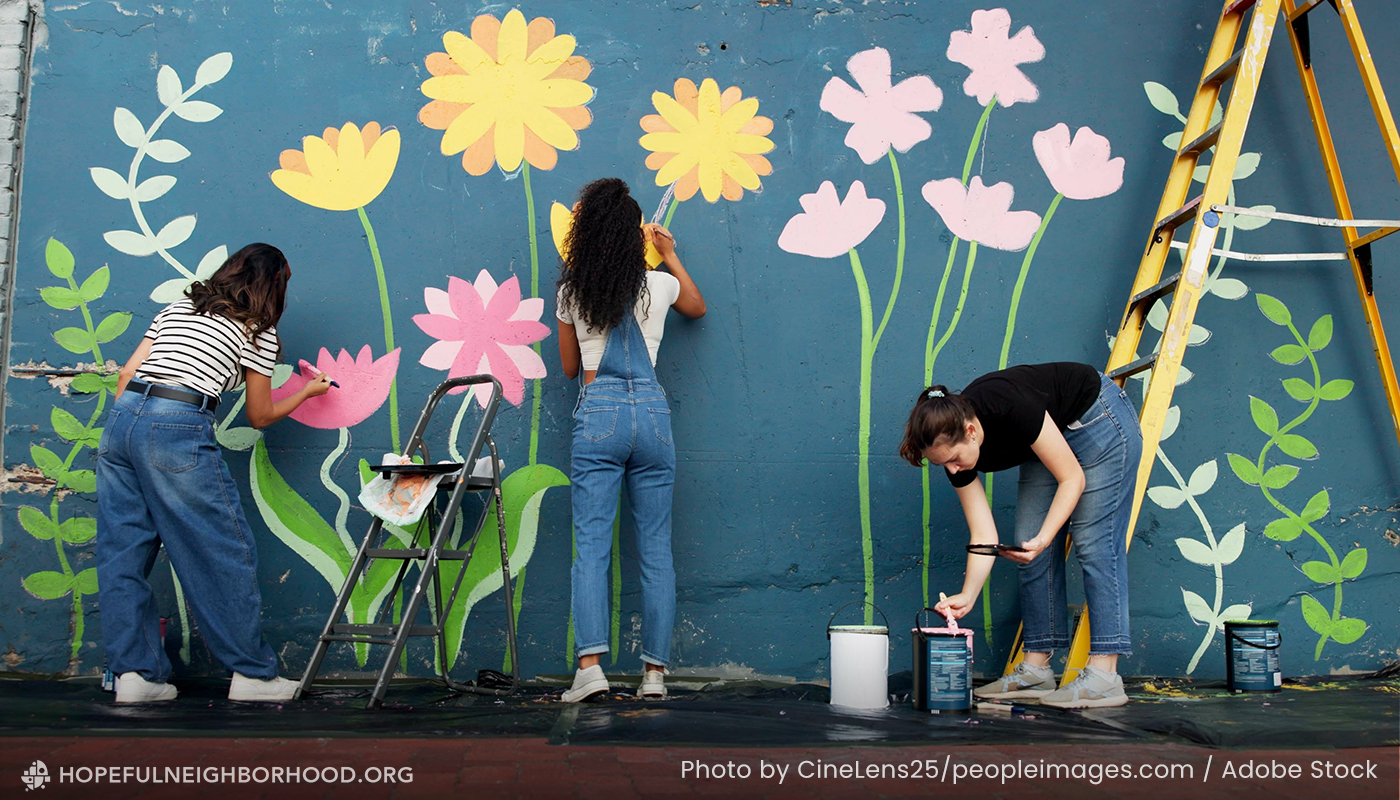
- The Beautiful: the realm of creativity, aesthetics, and design
- The Prosperous: the realm of economic life
- The Just and Well-Ordered: the realm of political and civic life
- The Sustainable: the realm of natural and physical health
As a practitioner, when I read this list, everything in me says, “Yes, this is so good. This is what we want for our cities, communities, and neighborhoods.” As someone who cares deeply about the place I call home, it gives me clarity on what I should pursue. As a scholar, when I see this list and all the research that went into it, I take great joy. I’m grateful that I can learn from others who have been intentional about creating more hopeful places. Pursuing the thriving and shalom of their locales.
It challenges me to ask the question, “What am I making of my world?” It causes me to pause and think about what could be and how I can contribute to making it that way.
Danny Brister, Jr.
Creating Community Culture
I strive to be a scholarly practitioner – both a learner and a leader – putting my hands to work, cultivating the culture and beauty in my community. Andy Crouch, author of Culture Making: Rediscovering Our Creative Calling, defines culture as “what we make of the world.” I love that definition. It challenges me to ask the question, “What am I making of my world?” It causes me to pause and think about what could be and how I can contribute to making it that way.
In his critically acclaimed autobiography, A Promised Land, former President Barack Obama recounts his days as a community organizer on the South Side of Chicago. He tells of a workshop he would conduct that helped people think through the world as it is and the world as it should be. If you are going to lead in your neighborhood, then you must root people in the world as it is and help them flourish into the world as they dream it could be. This reminds me of what former writer and business leader Max DePree says: “The first responsibility of a leader is to define reality. The last is to say thank you. In between, the leader is a servant.” We serve others by fostering a culture that enables them to thrive.
If you are reading this, then you care not only about your flourishing, but also about the flourishing of your neighbors. So, how do you put this into practice?
Seeking Shalom with the Six Endowments
Here are three things to help get you started:
- Take a look at the Six Endowments of Human Ecology and ask yourself, which area you feel most equipped or most passionate to get involved in. If you’re in the healthcare profession, do you want your neighbors to have greater awareness of the resources available to them in the healthcare field? Or maybe you’re an artist and you want more children in your neighborhood to experience the joy of creating. It’s always a good idea to start with our strengths and passions.
- Secondly, take a look around you. What currently exists? What is your neighborhood or broader community known for? Are people aware of the available resources and taking advantage of them? If not, it’s time to do a little research. Take this list and Google it or, better yet, ask your neighbors about where people go to learn and study in your area.
- Finally, jump in. Maybe after your research, you discover that the local library has a great after-school reading program. But, you learn, they are short on volunteers, and you are passionate about kids learning to read. Or maybe like my community, you have an organization that focuses on adult literacy in certain neighborhoods, and you and your church, sorority, fraternity, or group of friends can help support what currently exists. Or you discover that the area you are most passionate about doesn’t have an activity, program, or any resources at all. Now you can learn how to bring those to your neighborhood. I wrote a series about leading in your neighborhood that may be helpful as you start that journey. You can access it here!
Let’s continue to pursue the shalom of our neighbors as we seek to create more hopeful neighborhoods!


0 Comments